Pharmacological treatment of aural hematoma in a dog
Keywords:
auricular, hematoma, fibrinolytics, treatment, corticosteroidsAbstract
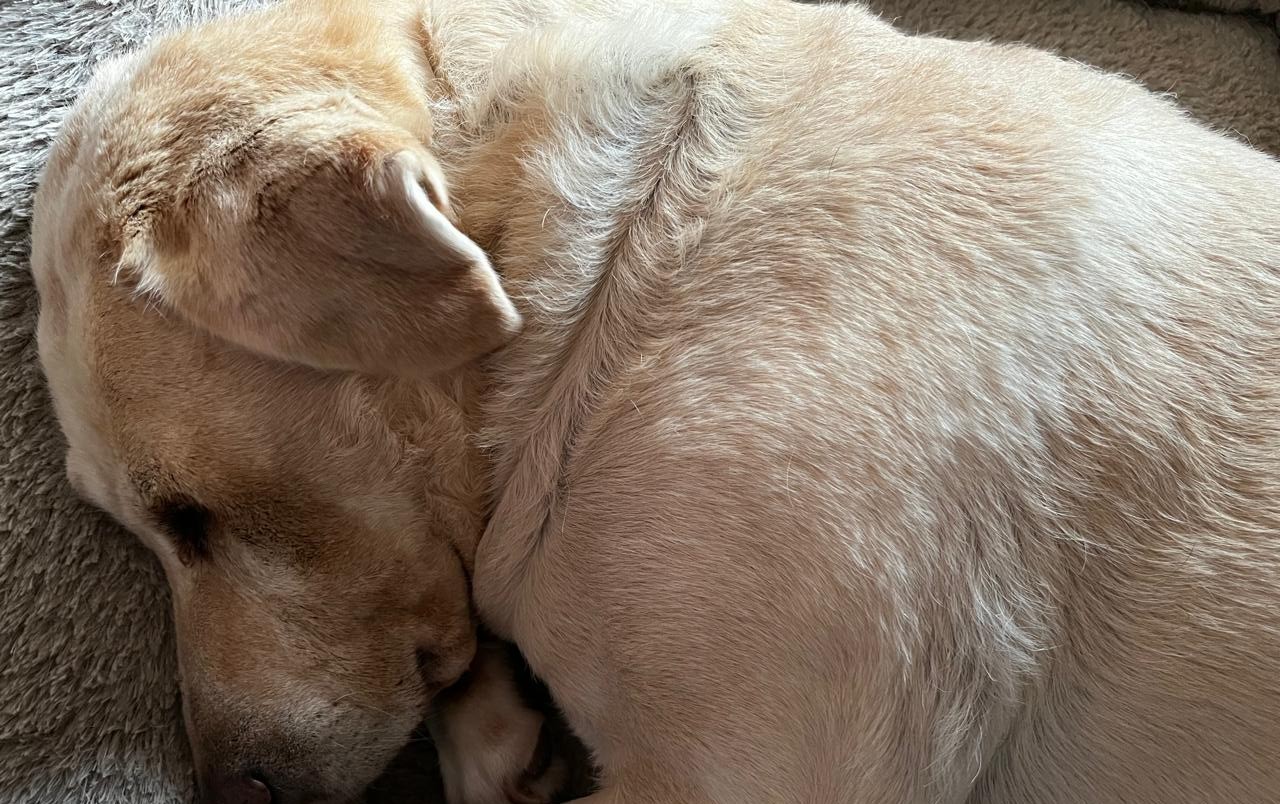
Auricular hematoma is defined as an increase in subcutaneous volume, there is usually blood in the auricle secondary to a rupture of the capillaries producing a separation of the auricular cartilage and the skin. It is generally observed unilaterally or bilaterally in patients with a history of otitis or alteration of the coagulation factors. We present the 1clinical case of a 12-year-old domestic dog, Labrador breed, with a history of an increase in volume of the right ear for 8 days. In the general physical examination, serum was observed an increase in the volume of fluid in the auricle. The corresponding blood tests were performed with normal ranges, and the study of hemoparasites was negative. Triamcinolone 0.2 mg/kg was started as a single dose in the affected area after draining approximately 5 mL of bloody fluid. The dog was sent home with serratiopeptidase 1 mg/kg every 24 hours for 10 days. The dog was checked 8, 21 and 90 days after treatment, showing 90% improvement and mild fibrosis in the atrium. No further treatment with corticosteroids was applied. The use of corticosteroids with fibrinolytics is a good treatment option of auricular hematoma.
Abanico Boletín Técnico. January-December, 2026. 5:1-7
Clinical Case. e2025-53.
References
HALL J, Weir S, Ladlow J. 2016.Treatment of canine aural haematoma by UK veterinarians. Journal Of Small Animal Practice. 57(7):360-4. ISSN:1748-5827. https://doi.org/10.1111/jsap.12524
LAHIANI J, Niebauer GW. 2020.On the nature of canine aural haematoma and its treatment with continuous vacuum drainage. Journal Of Small Animal Practice. 61(3):195-201. ISSN:1748-5827. https://doi.org/10.1111/jsap.13107
MacPHAIL C. 2016. Current treatment options for auricular hematomas. Veterinary Clinics of North America: Small Animal Practice. 46(4):635-41. ISSN 1878-1306. https://doi.org/10.1016/j.cvsm.2016.01.003
Nuñez-Ochoa L, Bouda J. 2007. Patología Clínica Veterinaria. Universidad Nacional Autonoma de México, Ciudad de México. ISBN:9703245501. Pp. 233.
NUTTAL T. 2023. Managing recurrent otitis externa in dogs: what have we learned and what can we do better?. Journal of the American Veterinary Medical Association. 7;261(S1):S10-S22. ISSN: 1943-569X.
https://doi.org/10.2460/javma.23.01.0002
PALAGIANO P, Graziano L, Scarabello W, Berni P, Andreoli V, Grolli S. 2023. Platelet- rich plasma treatment supported by ultrasound detection of septa in recurrent canine aural hematoma: a case series. Animals. 13(15):2456. ISSN: 2076-2615.
https://doi.org/10.3390/ani13152456
PEREGO R, Spada E, Moneta E, Baggiani L, Proverbio D. 2021. Use of autologous leucocyte- and platelet-rich pPlasma (L-PRP) in the treatment of aural hematoma in dogs. Veterinary Science. 28(9):172. ISSN: 2297-1769.
https://doi.org/10.3390/vetsci8090172
O'NEILL DG, Lee YH, Brodbelt DC, Church DB, Pegram C, Halfacree Z. 2021. Reporting the epidemiology of aural haematoma in dogs and proposing a novel aetiopathogenetic pathway. Science Report. 11(1):21670. ISSN 2045-2322. https://doi.org/10.1038/s41598-021-00352-0
RÜFENACHT S, Schellenberg S, Borio S, Summerfield A, Ricklin ME. 2022. Non-blinded treatment of aural -hematoma with oral prednisolone as a monotherapy in privately-owned dogs. Schweiz Arch Tierheilkd. 164(6):447-455. ISSN: 0036-7281.
https://doi.org/10.17236/sat00358
SANTHOSH K. 2018. The emerging role of serratiopeptidase in oral surgery: literature update. Asian Journal Of Pharmaceutical and Clinical Research. 11(3):19–23. ISSN 2455-3891. https://doi.org/10.22159/ajpcr.2018.v11i3.23471
Published
Issue
Section

This work is licensed under a Creative Commons Attribution-NonCommercial 4.0 International License.